

Family Dispute Resolution: Certificates now required

Family Dispute Resolution: Certificates now required

Family Dispute Resolution

New regulations have been made which will govern the introduction of compulsory dispute resolution in parenting cases and the accreditation of family dispute resolution practitioners.

The Family Law Amendment Regulations 2007 (No 1) amend the Family Law Regulations 1984 to reflect changes introduced by the Family Law Amendment (Shared Parental Responsibility) Act 2006. In particular the Regulations:

· Establish the Family Dispute Resolution Register;

· Introduce interim Accreditation Rules for family dispute resolution practitioners;

· Prescribe information to be given to people prior to family dispute resolution;

· Prescribe information to be provided by legal practitioners and courts under the Act; and

· Prescribe matters for the purpose of section 60I of the Family Law Act, which requires that a certificate from a family dispute resolution practitioner be filed with an application for an order under Part VII of the Act.

Members are reminded that from 1 July, courts will not be able to hear an application for a parenting order in a new case unless the person seeking the order first obtains a certificate from a registered family dispute resolution practitioner. There are some exceptions, such as in cases of family violence or child abuse.

All family dispute resolution practitioners must be included on a new family dispute resolution register in order to issue valid certificates.

Source: Family Law Section, Law Council of Australia
Request an Appointment
Fill in the form below to find out if you have a claim.
Request an Appointment - Stephen Page
Things to Read, Watch & Listen

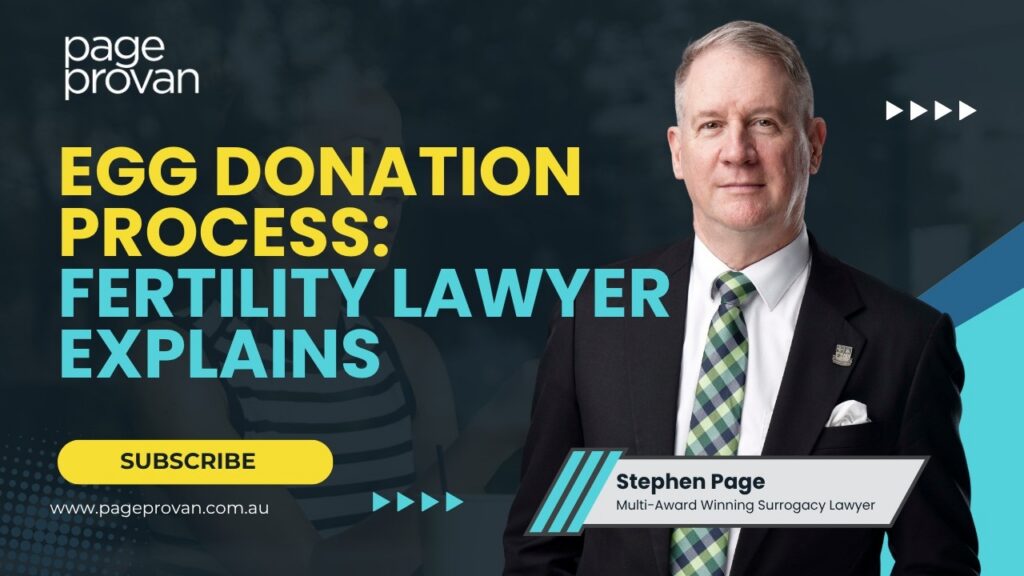
Egg donation process: fertility lawyer explains

Egg donation involves more than agreeing to help someone have a child. Before treatment proceeds, the donor needs medical clearance, the IVF clinic requires consent forms, and counselling forms part of the preparation. Where the donor knows the intended parent or parents, there is also an important question: what has everyone agreed will happen with… Read More »Egg donation process: fertility lawyer explains

Egg donation in Australia: who can donate?

Egg donation can help another person or couple become parents. But donating eggs involves more than medical treatment. It also involves decisions about consent, identity, family connections and the interests of a child who may be born. The starting point is straightforward: an egg donor must be donating their own eggs, have medical clearance and… Read More »Egg donation in Australia: who can donate?

De facto relationship: what counts under family law?

Sharing a home does not automatically make two people a de facto couple. Equally, living apart does not necessarily mean that a de facto relationship cannot exist. Under Australian family law, the question involves more than an address. The central issue is whether the couple’s relationship amounts to living together on a genuine domestic basis.… Read More »De facto relationship: what counts under family law?

Family Law Section Law Council of Australia Award
Member of Queensland law society
Family law Practitioners Association
International Academy of Family Lawyers - IAFL
Mediator Standards Board