International Day Against Homophobia

International Day Against Homophobia

Today, May 17, is International Day Against Homophobia.

This year is particularly significant because it is the 60th anniversary of the adoption of the Universal Declaration of Human Rights. These rights extend to all of humanity, being the entitlement of everyone,regardless of sexual orientation, gender identity or expression. Everyone, including sexual minorities, are entitled to freedom of expression and freedom of abuse.

The Universal Declaration of Human Rights was adopted in 1948, immediately after World War II, when Hitler’s murderous regime targetted and murdered in its concentration camps and “research facilities” anyone it didn’t like, including Jews, Russians, Gypsies, disabled people, and gays and lesbians.

Since World War II there has been enormous progress in the protection of human rights, but there is much more to be done. Before the Asian Bubble crash about 10 years ago we heard that there did not need to be the same respect for democracy and human rights in Asia because there were “Asian values” which were supposed in some way to be different to universal human values and human rights. Hopefully those views have changed and are changing.

Unfortunately there are still countries in the world where being gay or lesbian or just different means that you end up being persecuted, as the ILGA map on my blog shows, including with criminal punsihments of the death penalty.

The International Lesbian and Gay Association (ILGA) reports that no less than 86 countries still criminalize consensual same sex acts among adults, thus institutionally promoting a culture of hatred. Among those, 7 have legal provisions with death penalty as punishment. To those 86 countries, there are 6 provinces or territorial units which also punish homosexuality with imprisonment.

Request an Appointment
Fill in the form below to find out if you have a claim.
Request an Appointment - Stephen Page
Things to Read, Watch & Listen

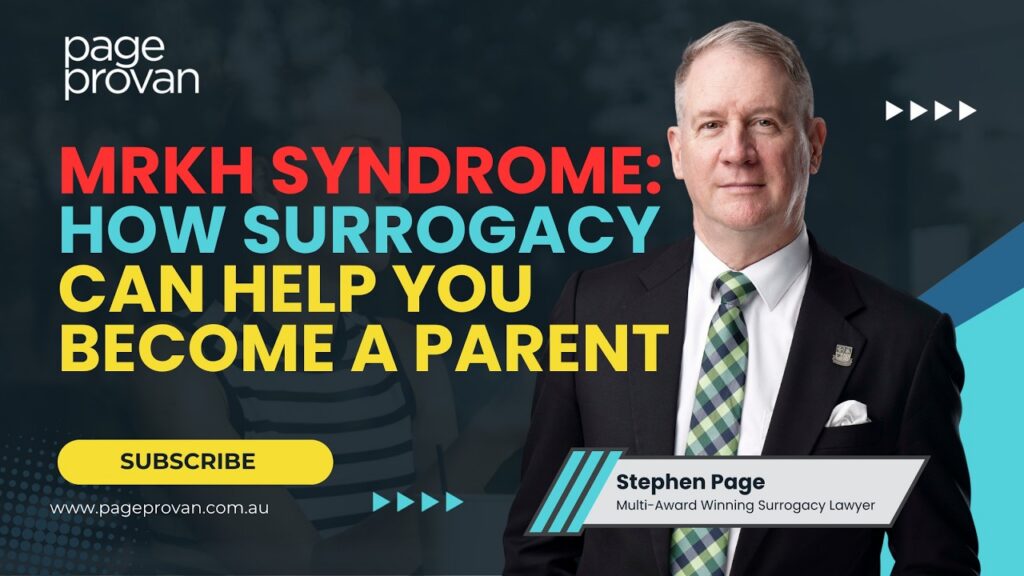
MRKH syndrome: how surrogacy can help you become a parent

MRKH syndrome means being born without a uterus. It does not mean that parenthood is impossible. For women with Mayer-Rokitansky-Küster-Hauser syndrome, often shortened to MRKH, the journey to understanding their body can begin at a young age. Many discover in their early teenage years, commonly around 14 or 15, that they will not be able… Read More »MRKH syndrome: how surrogacy can help you become a parent

Australian Overseas Surrogacy Births Hit Record High Again in 2026 — Here’s Where Families Are Going

Another record year for overseas surrogacy births For every child born through surrogacy in Australia, five are born overseas. Despite laws allowing altruistic surrogacy, the shortage of available surrogates within Australia has meant that the norm is to undertake surrogacy overseas, and the exception is to do so at home. A record 416 Australian children… Read More »Australian Overseas Surrogacy Births Hit Record High Again in 2026 — Here’s Where Families Are Going

Surrogacy statistics: why so many go overseas

Surrogacy is intensely personal, but the numbers tell an important story about how difficult it can be for intended parents in Australia. The central statistic is striking: for every child born in Australia through surrogacy, about four are born overseas. That is not a small difference. It points to a system in which many intended… Read More »Surrogacy statistics: why so many go overseas

Family Law Section Law Council of Australia Award
Member of Queensland law society
Family law Practitioners Association
International Academy of Family Lawyers - IAFL
Mediator Standards Board