Speech to West African community leaders
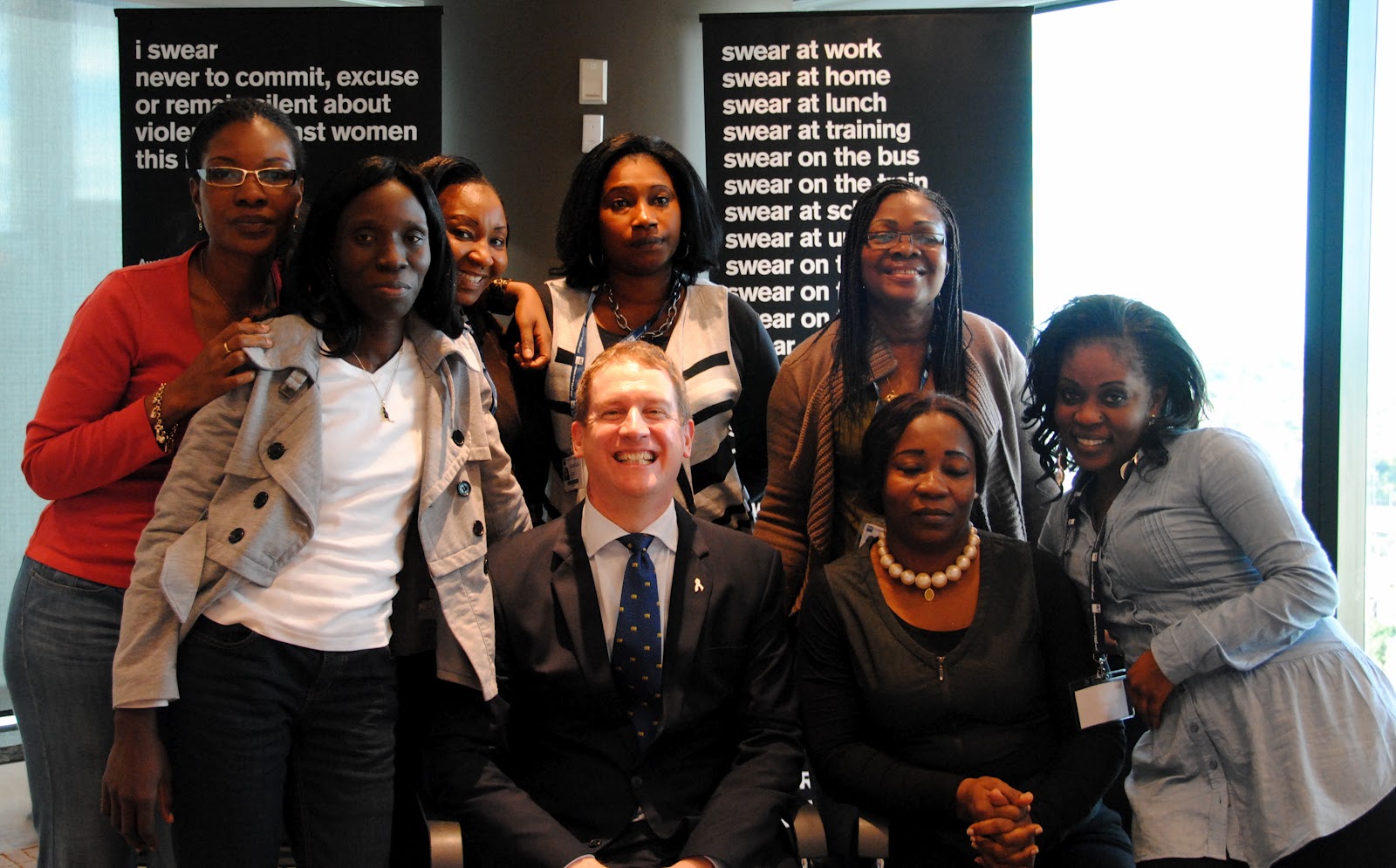
Following my speech, with members of the women’s network.
Last week, at the invitation of Australia’s CEO Challenge, I spoke to community leaders from countries in French speaking west Africa, including:
- Republic of the Congo
- Mali (who were lucky to attend, as they had been delayed due to the shutdown of their international airport due to a coup)
- Togo
- Burkina Faso
These community leaders were in two broad networks- a women’s network and a disabilities network. I told the men and women in attendance that I was honoured and humbled to be able to speak to them. After all, I had only walked a few city blocks to get there, but that they had travelled from the other side of the world.
I talked about my role as a White Ribbon Ambassador. The group were keen to learn about the White Ribbon Day movement of men saying that they were opposed to violence against women. While I did talk about what I had done in my life so far to oppose domestic violence, including my role as a White Ribbon Ambassador, I decided that it was important that my audience be inspired to oppose domestic violence.

Harvey Freeman
I considered that the way of doing this was to tell them four universal truths:
- Domestic violence is pervasive. It occurs throughout the world. It does not occur, for example, merely in developing countries, but also in rich developed countries such as Australia. The meeting was at Waterfront Place, Brisbane, at the offices of Minter Ellison, who have been very generous supporters of Australia’s CEO Challenge. I pointed to the Story Bridge. I said that on her first day of school, but before she got there, Darcey Freeman’s dad threw her off a similar bridge, in the presence of Darcey’s brothers and other motorists, prompting a shakeup of Australia’s family law system about how it dealt with domestic violence. I said that only a few weeks before a man had thrown his 2 year old child off the Story Bridge, and then killed himself too by throwing himself off.

Story Bridge, from Minter Ellison’s office.
- To change the system, to make us all safer, requires courage. The courage to speak up and to do things, even if they are not popular, but are necessary.
- Ordinary people, people like me who are not in positions of great power and privilege, with courage, strength of will, organisation and above all persistence, can achieve change. I said that substantial, postive change had been achieved, and the domestic experience is now a much safer one than it was a generation ago, although much remains to be done.
- It is necessary to remain optimistic. Change can and does happen. While reality should always take hold, to be able to dream of change, and act on that change enables a change away from violence to occur. To be accepting of violence is to take a defeatist and pessimistic view, which ultimately will be a self-fulfilling one of reinforcing no change.
Disclosure: I am the Deputy Chair of Australia’s CEO Challenge.