

Today is IDAHOT Day
Tuesday, May 17, 2016

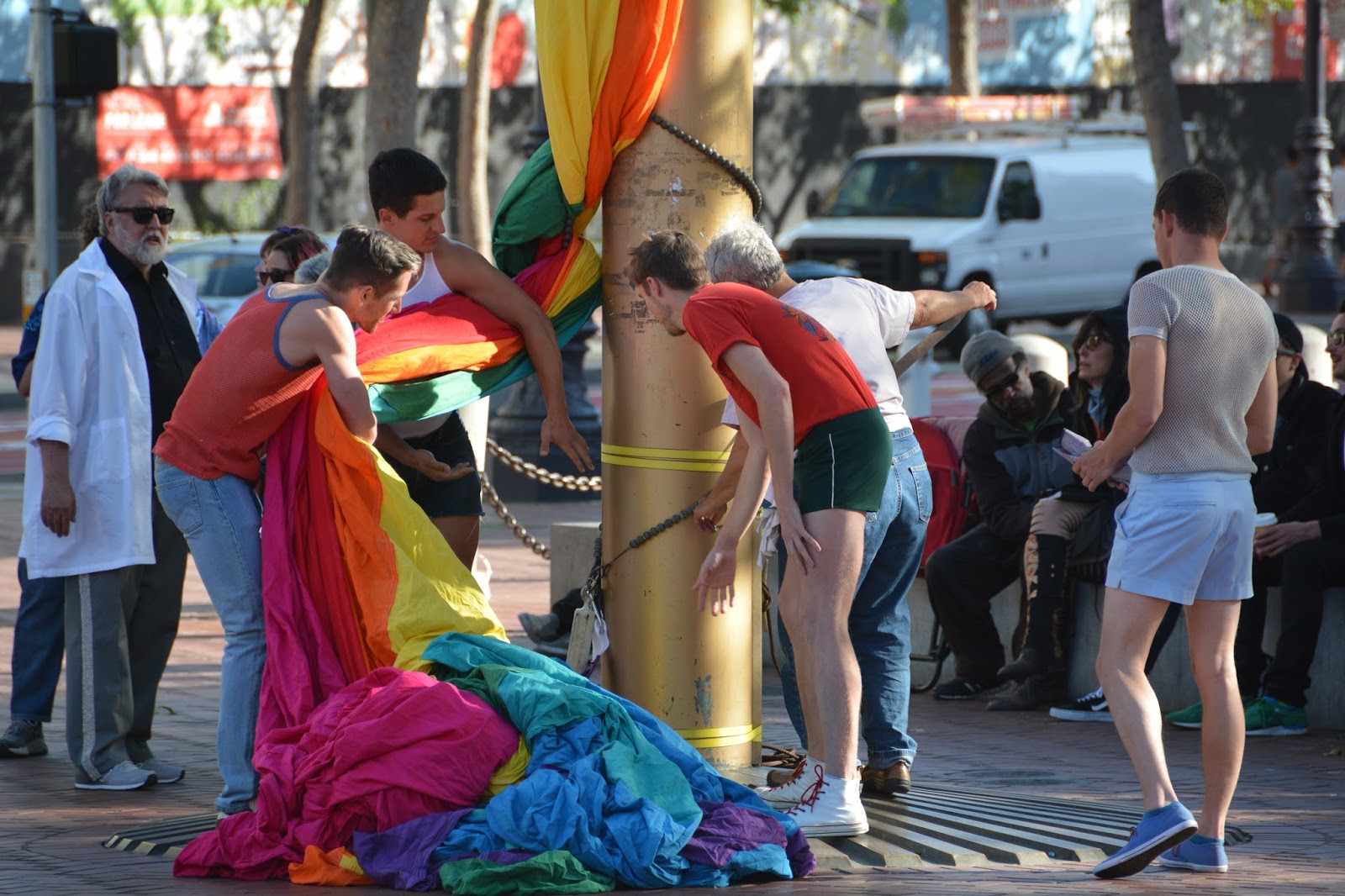
Today is IDAHOT Day, the International Day Against Homophobia, Transphobia and Biphobia.
For those who think that the law is equal, and society’s attitudes to LGBTIQ people is one of acceptance, consider this:
- I love my husband. We express that love in many ways, including by walking down the street holding hands. Few gay or lesbian couples take the “brave” step of holding hands in public, because of the fear of being abused, including being bashed, as has been identified by the Australian Human Rights Commission, amongst others. Extraordinarily, my husband and I have been called activists because we hold hands in public!
- Our experience is that most people share our joy. To see two people in love is, after all, a joyous moment. However, too often, whether in Brisbane, Sydney or Melbourne (Sydney and Melbourne especially being worse in this regard than Brisbane, counter-intuitive that that may sound), we get called “faggots”, and suffer other homophobic abuse.
- We married last year in the US. We then travelled home. On coming home, we were officially unmarried. We then travelled to South Africa- where our marriage was recognised. On returning home, we were again recognised as unmarried. We have now travelled, for my work, to the US and Bahamas. On going to the US, our marriage is again recognised, but not in the Bahamas. On returning to the US, our marriage was again recognised, but coming home today of all days, again, sadly, our marriage is not.
- Many of my American colleagues are genuinely shocked that in this country, seen there as modern and progressive, equal marriage laws don’t exist. They remember pioneering reforms in Australia, including the right of women to vote, and the secret ballot, and assumed that we must have equal rights with marriage, and many other similar rights, such as the ability to adopt, but we don’t.
- Last year the Turnbull government gave a commitment that by June this year, all the current discriminatory rules against LGBTIQ people in Australia (except marriage) will be removed. They haven’t been, and won’t be, at best, until the new Government of whichever stripe is elected.
- But our lot is mild compared to other countries. I learnt that in the Bahamas, for example, that if gays are discreet, they aren’t abused, but trans people are. Bashings of trans people are not uncommon. They are simply not accepted there. In other countries, such as Pakistan, the penalty for anal sex is death.
Please remember that we are all different. The true strength of a democracy is not only equality under the law, but that a minority is not oppressed by the majority. So please remember IDAHOT Day, if only to remember the core message- that those who are different aren’t bullied for being different, but are loved, cherished and accepted.