Is the West Australian Surrogacy Act Unconstitutional?
The West Australian Surrogacy Act is at the centre of a constitutional challenge that could transform who may lawfully pursue surrogacy in Western Australia. The matter was heard in the Supreme Court on 18 November 2025, and judgment was expected within six weeks. At stake is whether state surrogacy rules that exclude single men, gay couples and many trans, intersex and non-binary people amount to unlawful discrimination under federal law.
What the law currently says and why it matters
The West Australian Surrogacy Act contains eligibility rules that limit access to surrogacy to certain categories of people. Those excluded most obviously include single men and male couples. More broadly, people who do not fit the traditional heterosexual couple model — including many trans, intersex and non-binary people — can also be locked out.
This exclusion is not simply a policy choice. The challenge argues the West Australian Surrogacy Act is inconsistent with the Commonwealth Sex Discrimination Act as amended in 2013, which expressly prohibits discrimination on the basis of sexual orientation, gender identity and intersex status. The federal amendment included a transition period for states to align their laws; for Western Australia that period ended in 2017.
How federal law can override state law
When federal legislation prohibits discrimination in a particular field, state laws that operate inconsistently can be rendered invalid to the extent of the inconsistency. That principle underpins the current challenge: if the West Australian Surrogacy Act treats people differently on prohibited grounds, the federal Sex Discrimination Act may prevail.
Relevant federal protections
The 2013 amendments to the Sex Discrimination Act broadened protection for LGBTQIA+ people and others, prompted in part by international scrutiny. The amendments make it unlawful to deny services or opportunities on the basis of sexual orientation, gender identity and intersex status. Surrogacy and assisted reproductive services are within the scope of those protections.
Precedents that matter
There is clear precedent where state restrictions on assisted reproductive treatment have been struck down on constitutional grounds. Three landmark cases illustrate the point and provide a roadmap for why the present challenge may succeed.
- South Australia, 1996: A law restricting access based on relationship status was held invalid so that a woman not living with her husband could access treatment.
- Victoria, early 2000s: The McBain case involved a doctor who challenged a Victorian rule that denied IVF to single women. The federal court found the state rule inconsistent with federal anti-discrimination protections.
- Victoria, 2018: A rule requiring a husband’s consent for his wife to access treatment was rejected as discriminatory and incompatible with federal law.
Each decision confirms that where state laws create unjustifiable barriers to reproductive services, federal anti-discrimination law can provide a legal remedy.
Why this particular challenge is urgent
The legal challenge in the Supreme Court was brought by a gay couple who wish to proceed with surrogacy now. At the same time, an assisted reproductive technology and surrogacy bill sits before the Western Australian Parliament which would reform the law but only with an implementation period of around 18 months.
The intended parents who commenced the court action say they cannot wait that long. The litigation therefore tests whether judicial relief can bridge the gap between discriminatory current law and an eventual legislative fix. If the West Australian Surrogacy Act is found inconsistent with federal law, affected couples and individuals would be able to move forward without waiting for parliamentary reform.
What a favourable judgment would mean
If the court declares the West Australian Surrogacy Act invalid to the extent it discriminates, practical consequences could include:
- The immediate removal of statutory barriers preventing single men and male couples from accessing surrogacy procedures.
- Stronger legal recognition for trans, intersex and non-binary intended parents where current wording excludes them.
- A signal to other jurisdictions that similar state-based restrictions may be vulnerable to constitutional challenge.
Practical considerations for intended parents
Anyone contemplating surrogacy in Western Australia should consider several practical steps while the litigation and parliamentary reform progress.
- Seek specialist legal advice from a lawyer experienced in surrogacy and family law. Experience matters; for many years experts have handled more than 2,000 surrogacy journeys and understand the intersection of clinic requirements, parental orders and statutory eligibility.
- Document timelines and reasons for urgency. Courts are more likely to grant relief when applicants can show realistic reasons for not waiting for legislative change.
- Stay informed about the progress of the parliamentary bill and any transition arrangements it proposes. Legislative reform may resolve some issues but may also contain implementation delays.
- Consider interstate options carefully. Some couples and individuals have sought services in other states where eligibility rules differ, but legal recognition at home remains the crucial issue.
Voices from the legal community
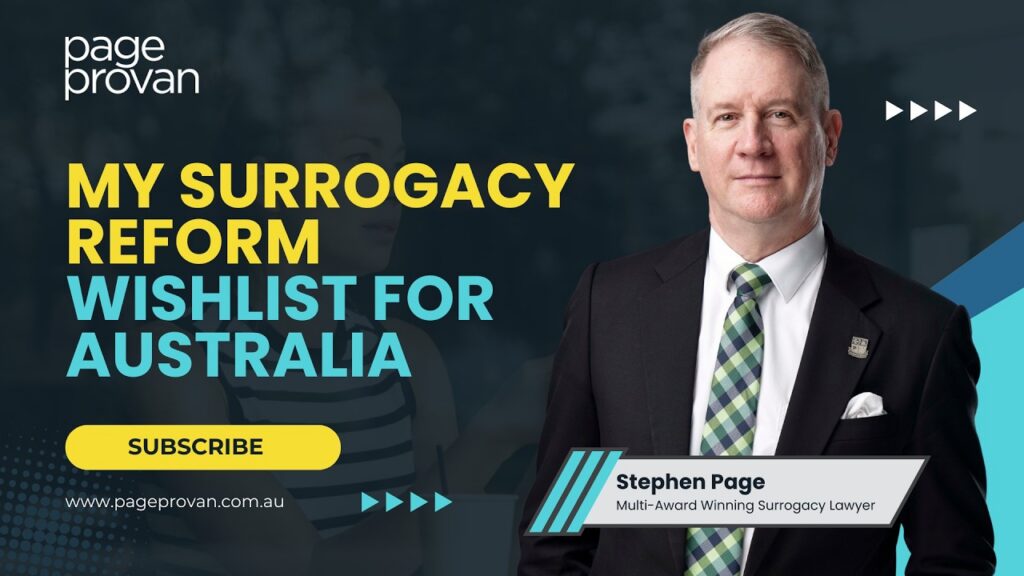
Stephen Page observed that the case tests whether “restricting surrogacy access on the basis of relationship or gender identity can withstand federal anti-discrimination law.”
The quoted observation highlights the central legal question: does the West Australian Surrogacy Act unjustifiably discriminate in a way that federal law forbids? Courts will weigh the purpose and effect of the state provisions against the protections afforded by Commonwealth legislation.
Possible outcomes and next steps
There are three broad outcomes to expect:
- Judgment for the applicants: State restrictions held invalid and access widened quickly.
- Judgment for the state: Current law upheld, likely prompting an accelerated legislative response or further appeals.
- Partial ruling: Some provisions struck down while others survive, creating a mixed landscape until Parliament acts.
Regardless of outcome, the case will shape the timing and content of legislative reform and provide clarity for intended parents, clinics and legal advisers.
Conclusion
The challenge to the West Australian Surrogacy Act presents a timely test of how federal anti-discrimination protections apply to reproductive services. The case draws on significant precedent and raises practical questions for those planning to become parents through surrogacy. For many, the central issue is straightforward: statutory rules should not deny people the opportunity to become parents because of who they are or whom they love. The coming judgment will be closely watched for its legal reasoning and real-world consequences.