
Catching up with Michael Tiyce

Catching up with Michael Tiyce

On Friday I finally met one of my interstate colleagues- prominent LGBT family lawyer Michael Tiyce. In the nature of today’s modern world, Michael and I have kept in regular contact- by phone, email and by Facebook, of course, but as he is in Sydney and I am in Brisbane, for some reason we had never met.

That was fixed on Friday, when I caught up with Michael and his associate Barry Apelbaum in Sydney. I was in Sydney to obtain a surrogacy parentage order.

Both Michael and Barry are keen on attending the LGBT Family Law Institute regional meeting in Brisbane on 12 and 13 March, 2016. This will be the first regional meeting of the LGBT Family Law Institute meeting in Australia, and the second outside the US (the first being in London in May this year).

Request an Appointment
Fill in the form below to find out if you have a claim.
Request an Appointment - Stephen Page
Things to Read, Watch & Listen

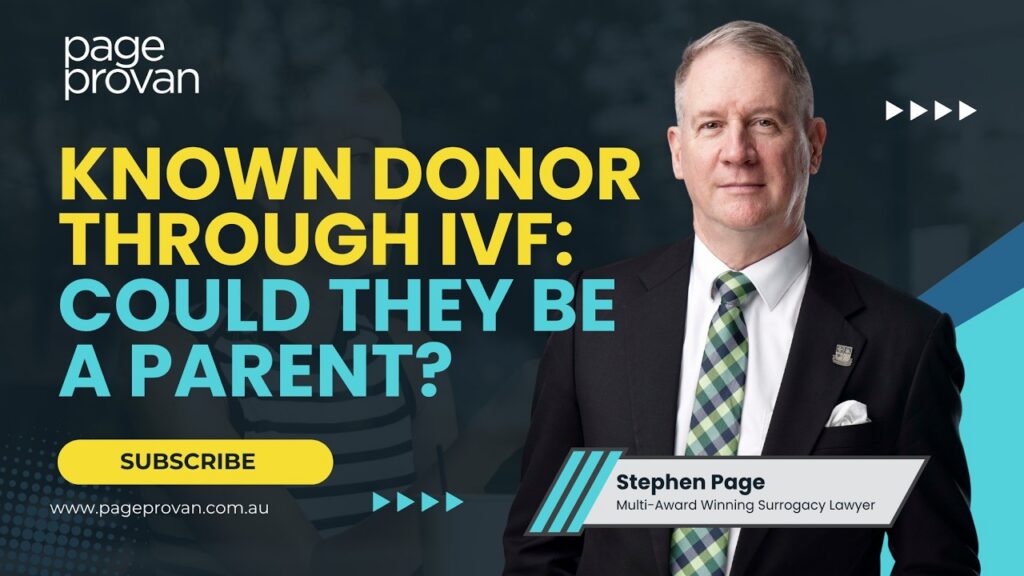
Known donor through IVF: could they be a parent?

Using an IVF clinic does not automatically settle who is legally a parent. That is a critical distinction for anyone planning a family with donor sperm, particularly where the donor is someone the intended parent or parents already know. A common assumption is that a sperm donor cannot be a parent if treatment happens through… Read More »Known donor through IVF: could they be a parent?

Page Provan’s Response to the Draft Global Consensus Statement on Minimal Standards for Surrogacy

Four leading fertility bodies have released a draft set of global surrogacy standards, and Page Provan has made a submission on it. ASPIRE (the Asia Pacific Initiative in Reproduction), ASRM, ESHRE and IFFS have prepared a draft Global Consensus Statement on Minimal Standards for Surrogacy, dated 29 October 2026. It sets out 21 statements to… Read More »Page Provan’s Response to the Draft Global Consensus Statement on Minimal Standards for Surrogacy

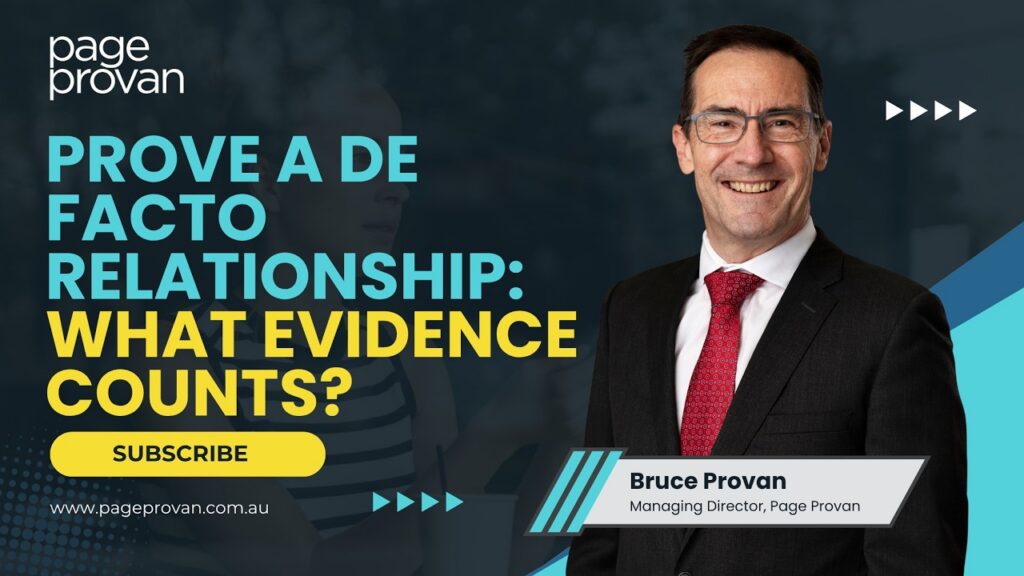
Prove a de facto relationship: what evidence counts?

A relationship can be real and significant to both people, yet still become the subject of disagreement after separation. One person may say they were in a de facto relationship. The other may disagree, or accept that a de facto relationship existed but dispute when it began or ended. When that happens, the question becomes… Read More »Prove a de facto relationship: what evidence counts?

Family Law Section Law Council of Australia Award
Member of Queensland law society
Family law Practitioners Association
International Academy of Family Lawyers - IAFL
Mediator Standards Board